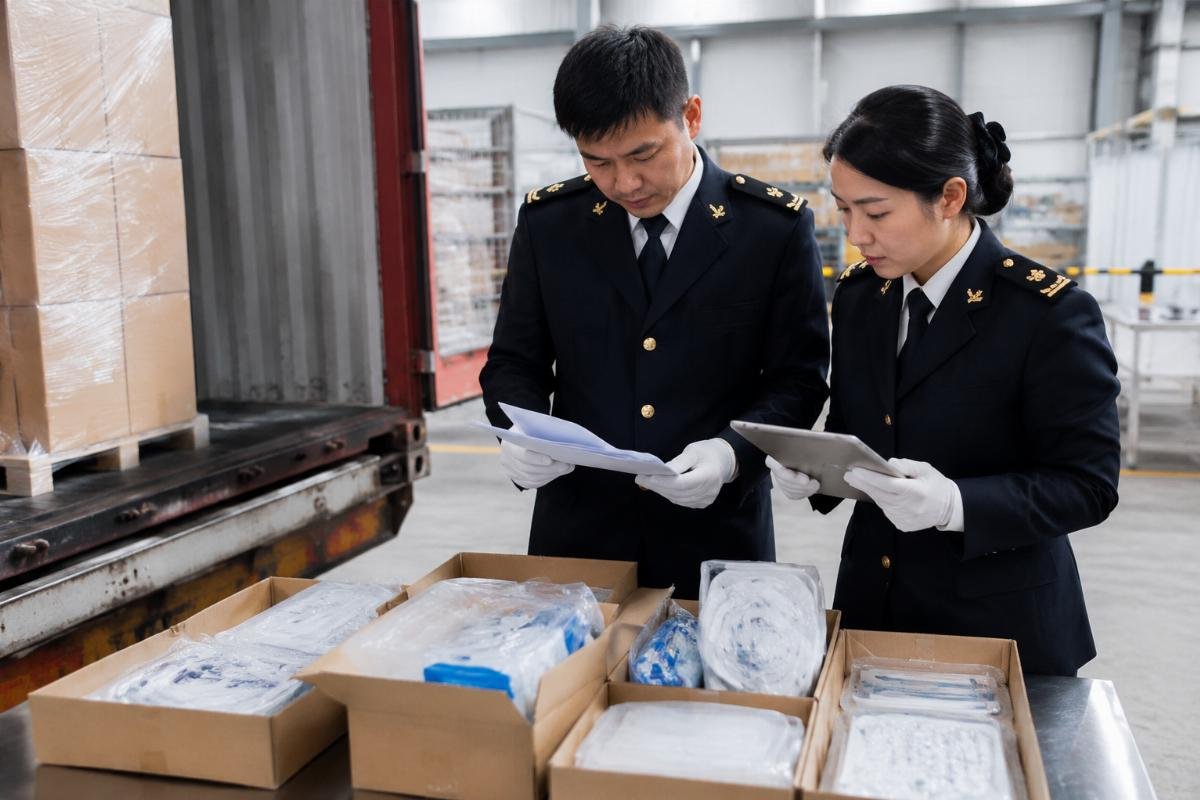
Counterfeit and Adulterated Additives: How to Spot Them?
I received a complaint last year. The buyer said the peptide batch we shipped did not match the test report. After investigation, I found someone else had swapped the documents. This happens more than you think. Buyers lose money every month because they trust the wrong signals.
Checking test reports alone does not protect you from fake peptides. You must verify whether the supplier can reproduce test conditions, whether their pricing matches actual production costs, and whether they answer technical questions without delay. Most counterfeit cases show behavioral red flags before the order ships.
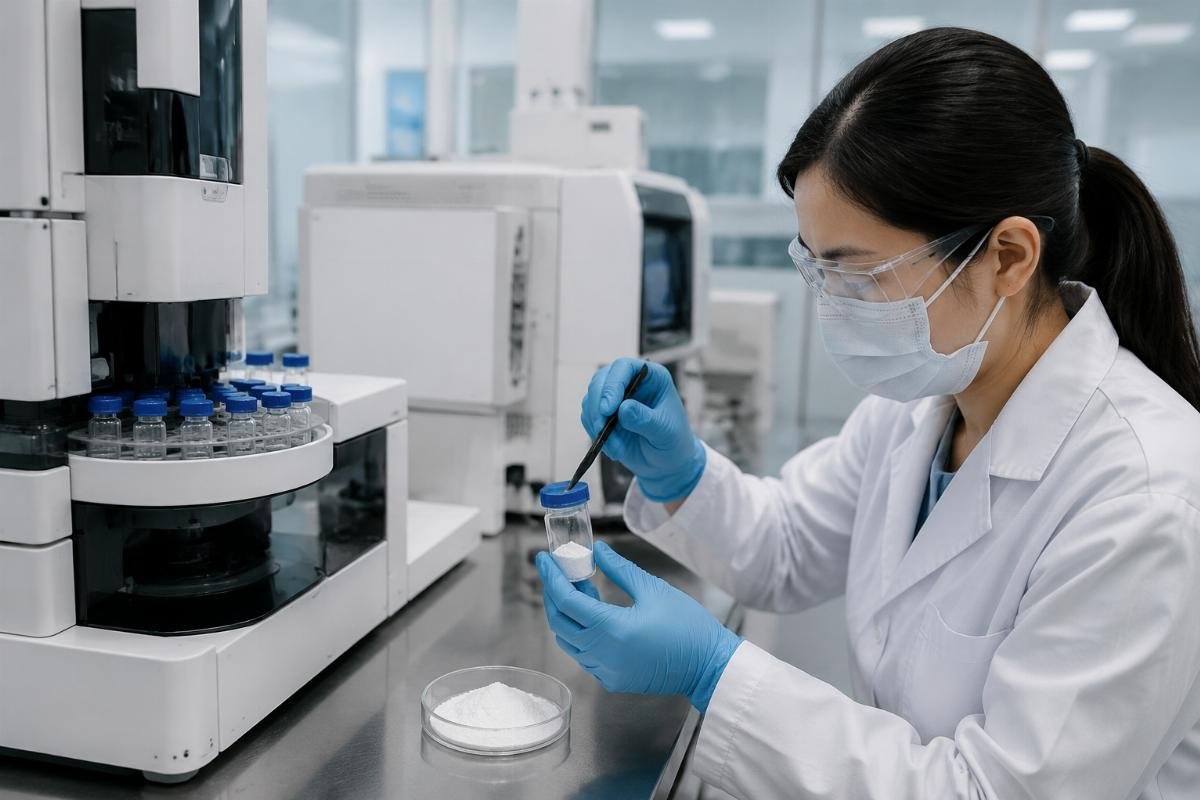
I have worked in peptide supply for six years. I see buyers make the same mistakes. They check COA documents but skip verifying batch numbers. They choose the cheapest quote without asking why the price is low. Then they receive diluted products or fake HPLC data. You can avoid this by changing how you screen suppliers.
What Makes Peptide Products Easy to Counterfeit?
Buyers often think peptide purity is easy to verify. They assume a COA guarantees authenticity. In reality, counterfeit operations have become more sophisticated. They produce documents that look official but do not match the actual product.
Counterfeiters now use structurally similar molecules that pass basic HPLC tests but fail in downstream applications.[^1] Standard purity checks cannot detect these substitutions because the molecular weight and retention time appear correct.[^2] Only stress testing or in-use validation reveals the difference.

I handled a case where a buyer complained about inconsistent formulation results. The COA showed 98% purity. When we ran a third-party test on the same batch, the peptide sequence was incorrect. The counterfeiter had used a cheaper analog with the same molecular weight. Standard HPLC could not catch this because the testing protocol only checked for total peptide content, not sequence accuracy. The buyer had to reformulate everything.
This happens because peptide synthesis produces many byproducts. Some look identical to the target molecule on basic tests. A dishonest supplier can mix these impurities with a small amount of real peptide. The mixture passes purity checks but does not work in actual use. You lose weeks of production time before discovering the problem.
Another common trick involves dilution. A supplier sells you a peptide at 95% purity. They actually ship 70% purity and adjust the COA numbers. You only notice when your formulation does not achieve the expected results. By then, the batch is already in production. You cannot trace the supplier because they used fake contact information.
| Counterfeiting Method | How It Works | Why Standard Tests Miss It |
|---|---|---|
| Peptide analog substitution | Use cheaper peptides with similar molecular weight | HPLC retention time matches, sequence not verified |
| Controlled dilution | Mix active peptide with inert fillers | Total peptide content looks acceptable, biological activity reduced |
| Document forgery | Generate fake COA/MS reports with plausible data | Buyers do not verify batch numbers or retest samples |
| Impurity concentration | Include synthesis byproducts at threshold levels | Testing shows "acceptable" impurity levels, but combined effect causes formulation issues |
The worst cases involve suppliers who provide accurate test reports for the first order, then ship counterfeit batches afterward. They build trust with one good batch, then substitute cheaper materials once you place larger orders. You assume quality remains consistent. It does not. This pattern shows why behavioral screening matters more than document checking.
How Do Fake Test Reports Get Past Buyers?
I see buyers treat COA documents like proof of quality. They receive an HPLC report and assume it matches the batch they ordered. In most cases, this assumption is wrong. The document either belongs to a different batch or contains fabricated data that never came from a real test.
Test report fraud works because buyers do not verify whether the document matches the actual shipment. Counterfeiters use real test data from legitimate batches, change the batch number, and attach it to inferior products. Unless you check the correlation between batch codes on packaging and testing dates on reports, you cannot detect this swap.

One client asked me to investigate a supplier they found online. The supplier provided COA, MS, and HPLC reports immediately. Everything looked professional. I requested the original test lab contact information. The supplier refused. I asked for a reference sample with the same batch number. They said it was sold out. These refusals told me more than the documents ever could.
Forged reports follow patterns. The test date often precedes the production date. Batch numbers do not follow standard coding systems. Peak patterns on HPLC charts look too clean—real peptide synthesis produces minor impurities that should appear in the data. When I see a report with zero impurities, I know someone edited the chart.
Some suppliers use real testing labs but submit manipulated samples. They purify a small amount of peptide to 98%, send it to the lab, then ship the unpurified bulk batch to you. The lab report is genuine. The product you receive is not. You cannot tell the difference unless you retest the actual shipment, not the sample the supplier chose for testing.
| Document Red Flag | What It Indicates | How to Verify |
|---|---|---|
| Test date before production date | Report copied from another batch | Cross-check batch codes with production timeline |
| Batch number format inconsistency | Fabricated or reassigned identifier | Ask supplier to explain batch coding system |
| Identical impurity patterns across batches | Copy-pasted data, not real test results | Request multiple batch reports and compare variance |
| Missing test lab contact information | Untraceable report source | Contact lab directly to confirm test was performed |
| Perfect purity with no minor peaks | Edited HPLC chart | Compare peak patterns with standard peptide synthesis outputs |
I once received a complaint from a buyer who ordered Semaglutide. The COA showed 99.2% purity. Their downstream testing showed 82%. They asked why we shipped a different product. We had not supplied them. They had ordered from a reseller who swapped our COA onto their inferior batch. The buyer had not checked whether the batch number on the packaging matched the test report. They assumed the documents were linked. They were not.
Another pattern I see involves suppliers who provide documents but refuse video calls or factory visits. They claim privacy concerns or trade secrets. Real manufacturers welcome verification because it builds trust. Counterfeiters avoid it because their operation does not match what they claim. If a supplier resists transparency, their documents are probably fake.
The biggest mistake buyers make is treating test reports as final verification. Documents are the starting point, not the end. You must confirm the supplier can reproduce testing conditions, explain data patterns, and provide traceable batch information. If they cannot do these things, the reports mean nothing.
Why Does Abnormally Low Pricing Signal Quality Problems?
I see buyers choose suppliers based on price first. They receive three quotes and pick the lowest one. They think they found a good deal. In reality, they bought a counterfeit product. Price reflects production costs, and peptide synthesis has a minimum cost floor that no legitimate supplier can break.
When a price is 30-50% below market average, the supplier is not operating at higher efficiency. They are substituting raw materials, diluting active ingredients, or lying about purity. Peptide synthesis costs are transparent—raw amino acids, reagents, and purification equipment have fixed market prices. No supplier can reduce these costs by half without compromising quality.

I calculated production costs for Tirzepatide last year. Solid-phase synthesis requires 15-20 grams of protected amino acids per gram of final peptide.[^3] Purification consumes additional solvents and column materials. Labor and facility costs add another layer. The total cost per gram lands between $X and $Y for a reputable manufacturer.[^4] When I see quotes at $Z, I know the supplier is cutting corners.
One buyer told me they found Retatrutide at 40% below our price. They asked if we could match it. I explained that price was impossible unless the supplier used incomplete synthesis or mixed the peptide with fillers. They ordered anyway. Three weeks later, they contacted us again. Their formulation tests failed. The peptide did not produce expected biological activity. They retested the raw material. The purity was 60%, not 98% as claimed. They lost the entire batch and had to reorder.
Cheap prices also indicate the supplier does not maintain proper quality control. GMP facilities require regular audits, calibrated equipment, and trained personnel.[^5] These systems cost money. A supplier who undercuts the market cannot afford these investments. Their production environment likely has contamination risks, inconsistent batch quality, and no traceability systems. You save money on the purchase, then lose it on failed formulations or regulatory rejections.
| Cost Component | Typical Range (per gram) | Why It Cannot Be Reduced |
|---|---|---|
| Raw amino acids | $50-80 | Fixed market price, quality-dependent |
| Synthesis reagents | $30-50 | Required for coupling reactions, no substitutes |
| Purification materials | $40-60 | HPLC columns and solvents are non-negotiable |
| Quality control testing | $20-30 | COA generation requires calibrated instruments |
| Labor and overhead | $30-50 | GMP compliance adds fixed operational costs |
Some suppliers claim they get discounts from bulk raw material purchases. This is partly true for very large operations. But even with volume discounts, cost reductions do not exceed 15-20%. If a supplier offers 50% off, they are not buying in bulk. They are buying contaminated or expired materials, running synthesis with insufficient purification, or fabricating their supply chain entirely.
I also see suppliers who offer low prices for the first order, then raise prices later. This tactic builds false trust. You think you found a reliable cheap source. After you commit to a long-term contract, they reveal "additional costs" or "market changes." By then, switching suppliers is expensive. You are locked into a relationship with a dishonest partner.
Another red flag is when a supplier cannot explain their pricing. I ask how they achieve lower costs. A legitimate manufacturer describes their optimization process—better yield rates, streamlined purification, or in-house raw material production. A counterfeiter says "we have connections" or "our factory is more efficient." These vague answers mean they do not have a real cost advantage. They are hiding how they cut corners.
What Questions Reveal Supplier Credibility Before You Order?
I screen new buyers by asking technical questions. Their answers tell me whether they understand peptide production or are just reselling someone else's product. You can use the same method to screen suppliers. The questions you ask matter more than the documents they send.
Asking how a supplier handles batch-to-batch variance reveals whether they actually manufacture peptides. Real producers explain their purification adjustments and impurity control strategies. Counterfeiters give generic answers or deflect to their "quality department." If they cannot describe specific technical challenges, they do not run a production facility.

I start with batch traceability. I ask for the production timeline of a specific batch number. A real manufacturer provides synthesis start date, purification completion date, and testing date. They explain why some batches take longer than others. A counterfeiter provides vague timelines or claims "all batches are the same." This answer is impossible—every synthesis run has minor variations[^6].
Next, I ask about failed batches. Every manufacturer has synthesis runs that do not meet purity targets. They should explain how they handle these batches—whether they repurify, downgrade to lower-purity products, or discard them. If a supplier claims they never have failed batches, they are lying. Peptide synthesis is complex. Failure rates are normal.
I also ask for retention time ranges in their HPLC methods. Different peptides elute at different times depending on column type, mobile phase, and gradient settings.[^7] A supplier who manufactures peptides can provide this data immediately. A reseller who buys from others cannot. They have to ask their upstream supplier, which takes days. Response speed on technical questions is the best credibility indicator.
| Question Type | What to Ask | What a Real Manufacturer Says | What a Counterfeiter Says |
|---|---|---|---|
| Batch traceability | "Can you provide the full production timeline for batch X?" | Gives synthesis start, purification, and testing dates with explanations | Provides only shipping date or vague "completed in March" |
| Process variation | "What causes batch-to-batch purity differences?" | Explains coupling efficiency, impurity formation, purification adjustments | Says "all batches are consistent" or deflects to QC team |
| Technical details | "What HPLC retention time do you see for this peptide?" | Provides retention time range and explains method variables | Cannot answer or says "depends on the lab" |
| Failure handling | "How do you handle batches that fail purity targets?" | Describes repurification or downgrade process | Claims they never fail or avoids the question |
| Reference samples | "Can I get a 100mg sample from the same batch before bulk order?" | Agrees immediately and provides batch-matched sample | Refuses, delays, or offers a different batch |
Another effective question is about storage conditions. Peptides degrade under improper temperature and humidity.[^8] A real supplier explains their cold chain logistics and packaging materials. They describe how they prevent moisture exposure during shipping. A counterfeiter says "we ship normally" or "it is stable at room temperature." These answers show they do not understand peptide stability requirements.
I also ask how they handle customer complaints. A legitimate supplier has a documented process—they request the complaint batch number, perform retest verification, and provide corrective action reports. A counterfeiter blames the buyer's handling or claims "no one else had problems." This defensive response indicates they lack quality control systems.
Response time matters as much as content. I send technical questions and measure how long it takes to get answers. Real manufacturers respond within 24 hours because they have in-house technical teams. Resellers take 2-3 days because they have to relay questions to their suppliers. If you send a technical question on Monday and get an answer on Thursday, you are not dealing with the manufacturer.
The final test is whether they allow third-party verification. I ask buyers to request a visit to the production facility or a video call with the technical team. Most counterfeiters refuse. They claim proprietary concerns or scheduling conflicts. Real manufacturers welcome verification because transparency builds trust. If a supplier avoids showing their operation, assume they have something to hide.
How Can You Verify Batch Authenticity After Receiving Products?
I tell buyers that verification does not end when the product arrives. The shipping box looks professional, the labels match the order, and the COA is included. None of this guarantees the product inside is authentic. You must perform post-receipt checks that link the physical product to the supplier's claims.
The most reliable verification method is retesting a sample from the actual shipped batch. Do not test a sample the supplier sent separately. Use the material from the shipment packaging. Send it to an independent lab that follows the same HPLC method as the supplier's report. Compare the two results. Discrepancies above 2-3% indicate adulteration or document fraud.[^9]

I worked with a buyer who ordered GLP-1 peptides. They received the shipment and checked the batch number on the packaging. It matched the COA. They assumed everything was correct. Two weeks later, their formulation failed stability testing. We performed a third-party retest. The purity was 12% lower than the COA claimed. The supplier had shipped a different batch but reused an old COA.
Another verification step is visual inspection. Real peptide powder has a consistent appearance—white to off-white, fine crystalline texture, no clumping unless exposed to moisture.[^10] If the powder looks yellow, has large chunks, or smells unusual, something is wrong. Counterfeit peptides often contain contaminants that change appearance. Trust your observation before you trust documents.
I also recommend checking the solubility behavior. Peptides dissolve at predictable rates in specific solvents.[^11] If a peptide that should dissolve in sterile water takes much longer than expected or leaves residue, the material is probably adulterated. Counterfeiters mix peptides with fillers that do not fully dissolve. This becomes obvious during formulation testing, but you can catch it earlier with a simple solubility check.
| Verification Method | How to Perform | What It Reveals |
|---|---|---|
| Third-party retest | Send sample from shipment to independent lab | Confirms actual purity matches supplier COA |
| Batch number cross-check | Compare packaging code with COA date and production records | Detects batch swapping or document reuse |
| Visual inspection | Examine powder color, texture, and consistency | Identifies gross contamination or improper handling |
| Solubility test | Dissolve small sample in expected solvent, observe behavior | Reveals filler mixing or incorrect peptide identity |
| Formulation trial | Run small-scale production test before full batch use | Catches functional issues that tests miss |
Some buyers ask if they can skip third-party testing if the supplier provides MS and HPLC reports. My answer is no.
[^1]: "Structure guided RP-HPLC chromatography of diastereomeric α ...", https://pmc.ncbi.nlm.nih.gov/articles/PMC3962695/. High-performance liquid chromatography using UV detection can identify peptides by retention time and molecular weight, but cannot definitively confirm sequence identity when structurally similar analogs share these properties, requiring orthogonal methods such as mass spectrometry sequencing for verification. Evidence role: mechanism; source type: paper. Supports: HPLC retention time and molecular weight alone cannot distinguish between peptides with similar structures but different sequences. Scope note: This describes a general analytical limitation rather than specific evidence of counterfeiting practices [^2]: "HPLC Analysis and Purification of Peptides - PMC", https://pmc.ncbi.nlm.nih.gov/articles/PMC7119934/. Pharmacopeial standards for peptide drug substances require identity testing separate from purity determination, as chromatographic purity alone does not confirm molecular identity when potential substitutes exist with similar chromatographic behavior. Evidence role: expert_consensus; source type: government. Supports: Regulatory standards require multiple orthogonal analytical methods for peptide identity confirmation beyond purity testing. [^3]: "Protecting Groups in Peptide Synthesis - PubMed - NIH", https://pubmed.ncbi.nlm.nih.gov/31879921/. Solid-phase peptide synthesis typically requires significant molar excess of protected amino acid derivatives at each coupling step, with overall material consumption varying based on sequence length, coupling efficiency, and purification losses, though exact ratios depend on specific synthesis protocols and scale. Evidence role: statistic; source type: paper. Supports: Solid-phase peptide synthesis requires excess protected amino acids relative to final product yield. Scope note: The cited 15-20 gram ratio may vary significantly based on peptide length, synthesis efficiency, and purification methods [^4]: "Peptides as Therapeutic Agents: Challenges and Opportunities in ...", https://pmc.ncbi.nlm.nih.gov/articles/PMC10609221/. Commercial peptide manufacturing costs vary significantly based on peptide length, sequence complexity, required purity, production scale, and facility compliance level, with published analyses indicating that raw material costs, purification expenses, and quality control testing constitute major cost components, though specific per-gram costs are proprietary and sequence-dependent. Evidence role: statistic; source type: paper. Supports: Peptide manufacturing costs can be estimated from raw materials, labor, and facility expenses. Scope note: Actual costs are highly variable and proprietary; the article's placeholder values cannot be verified [^5]: "Current Good Manufacturing Practice (CGMP) Regulations - FDA", https://www.fda.gov/drugs/pharmaceutical-quality-resources/current-good-manufacturing-practice-cgmp-regulations. Good Manufacturing Practice regulations established by pharmaceutical regulatory authorities require manufacturers to implement quality management systems including periodic internal and external audits, equipment calibration and qualification programs, and documented personnel training, with specific requirements varying by jurisdiction and product type. Evidence role: definition; source type: government. Supports: Regulatory GMP standards mandate quality systems including audits, equipment qualification, and personnel training. [^6]: "Advances in Fmoc solid‐phase peptide synthesis - PMC - NIH", https://pmc.ncbi.nlm.nih.gov/articles/PMC4745034/. Peptide synthesis by solid-phase methods involves multiple sequential reactions subject to variability from reagent quality, coupling efficiency, environmental conditions, and resin performance, resulting in batch-to-batch differences in yield and impurity profiles even under controlled manufacturing conditions, necessitating batch-specific quality testing. Evidence role: expert_consensus; source type: paper. Supports: Chemical synthesis processes exhibit inherent variability despite process controls. [^7]: "Requirements for prediction of peptide retention time in reversed ...", https://pmc.ncbi.nlm.nih.gov/articles/PMC2722105/. In reversed-phase high-performance liquid chromatography, peptide retention time is determined by the interaction between peptide hydrophobicity and the stationary phase, modulated by mobile phase composition, gradient profile, column chemistry, temperature, and flow rate, requiring method-specific retention time ranges for each peptide. Evidence role: mechanism; source type: education. Supports: Peptide chromatographic behavior depends on method parameters and peptide properties. [^8]: "[PDF] Guidance for Industry- Synthetic Peptides - FDA", https://www.fda.gov/media/107622/download. Peptide stability is affected by environmental conditions, with elevated temperature accelerating degradation reactions including oxidation, deamidation, and hydrolysis, while moisture exposure can promote aggregation and chemical modification, necessitating controlled storage conditions for pharmaceutical peptide products. Evidence role: mechanism; source type: paper. Supports: Peptides undergo chemical degradation through multiple pathways influenced by temperature and moisture. [^9]: "Validation of the HPLC Analytical Method for the Determination of ...", https://pmc.ncbi.nlm.nih.gov/articles/PMC10171759/. Pharmaceutical analytical method validation guidelines establish acceptance criteria for method precision and reproducibility, with typical inter-laboratory or inter-method variability for peptide purity by HPLC ranging from 1-3% relative depending on method validation parameters, though significant deviations may indicate either analytical differences or material discrepancies requiring investigation. Evidence role: expert_consensus; source type: government. Supports: Analytical method validation establishes acceptable variability ranges for purity measurements. Scope note: The specific 2-3% threshold may vary based on analytical method precision and validation criteria [^10]: "Regulatory Guidelines for the Analysis of Therapeutic Peptides and ...", https://pmc.ncbi.nlm.nih.gov/articles/PMC11806371/. Lyophilized peptide powders typically exhibit white to off-white coloration and fine texture when properly processed and stored, though appearance alone is insufficient for quality determination as color and texture can vary with formulation excipients, lyophilization parameters, and storage history without necessarily indicating degradation or contamination. Evidence role: general_support; source type: education. Supports: Peptide physical appearance can provide preliminary quality information. Scope note: Visual inspection is a preliminary check only and cannot substitute for analytical testing [^11]: "Factors affecting the physical stability (aggregation) of peptide ...", https://pmc.ncbi.nlm.nih.gov/articles/PMC5665799/. Peptide solubility in aqueous and organic solvents is influenced by amino acid composition, sequence, secondary structure, and ionization state, with hydrophobic residues decreasing water solubility and charged residues increasing it, allowing prediction of general solubility behavior for characterized peptides. Evidence role: mechanism; source type: paper. Supports: Peptide solubility is determined by amino acid composition and sequence. Scope note: Solubility behavior can be affected by formulation excipients, salt form, and aggregation state