
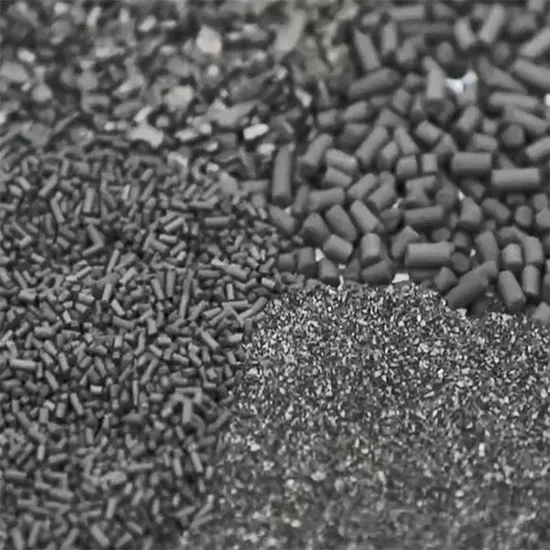


For industrial manufacturing and laboratory research purposes only.
Product Specifications
| Parameter | Value |
|---|---|
| Model NO. | Polyacrylamide |
| EINECS | 201-173-7 |
| Acid-Base Property | Neutral Surface Disposal Agent |
| Environmental Protection | Yes |
| Color | White |
| Appearance | Granulars |
| Type | Sewage Treatment Chemicals |
| Solid Content(%) | 88.5 |
| Business Type | Manufacturer |
| Packaging | 25kg/Bag,500kg Bags |
| Sample | Free Sample Support |
| Transport Package | Big Bag: 500kg/600kg Kraft Bag; Small Bag: 25kg |
| Specification | Powder Granular |
| Origin | Henan China |
| Production Capacity | 10000tons /Year |
| Package Size | 50.00cm * 35.00cm * 18.00cm |
| Package Gross Weight | 25.100kg |
Cation Polyacrylamide Flocculant (EINECS 201-173-7) for Consistent Sewage Treatment Performance
In wastewater treatment processes, inconsistent flocculation efficiency due to product quality variations can lead to non-compliant effluent discharge and increased operational costs. We've worked with over 1000 industrial clients across 50 countries, and the most common challenge remains finding a reliable cation polyacrylamide flocculant that delivers stable results batch after batch.
A Stable Solution for Industrial Sewage Treatment
Our Cation Polyacrylamide Flocculant addresses these challenges through rigorous manufacturing controls. With 10+ years of experience in chemical production, we ensure each batch meets the same high standards, providing the consistency needed for both large-scale industrial wastewater treatment and laboratory research applications.
Industrial Applications of Cation Polyacrylamide Flocculant
This wastewater treatment flocculant is widely used in various industrial sectors including municipal sewage treatment, textile dyeing wastewater processing, and paper mill effluent treatment. Its primary function is to aggregate suspended particles, facilitating their separation from water in industrial processing systems.
Key Specifications and Their Industrial Impact
The 88.5% solid content ensures high flocculation efficiency, reducing the dosage required for effective treatment compared to lower concentration alternatives. The granular appearance allows for easy dissolution and precise metering, critical for maintaining process stability. Our neutral surface disposal agent property minimizes equipment corrosion risks in treatment facilities, while the white color indicates low impurity levels, a key factor in avoiding secondary contamination of treated water.
Benefits of Using Our Cationic Flocculant
Choosing a high-quality cation polyacrylamide for sewage treatment translates to lower overall operational costs through reduced chemical usage and fewer process disruptions. Inferior products often lead to incomplete flocculation, requiring additional treatment steps and increasing sludge disposal costs. Our environmentally compliant formulation meets industrial standards, supporting your sustainability goals while ensuring regulatory compliance.
Quality Assurance You Can Rely On
Every batch of our polyacrylamide flocculant undergoes comprehensive testing to verify solid content, solubility, and flocculation performance. As a manufacturer with an annual production capacity of 10,000 tons, we maintain consistent supply even for large-scale industrial requirements. Our quality control system ensures that each delivery meets the specifications outlined in the product documentation, providing you with the reliability needed for continuous production processes.
Certificate of Analysis & Documentation
Each shipment includes a Certificate of Analysis (COA) with batch-specific test results. Material Safety Data Sheets (MSDS) are provided to ensure proper handling and storage. For quality verification, specific batch test records can be requested using your order reference number.
Storage & Handling
- Store in a cool, dry, well-ventilated area, sealed and away from direct sunlight.
- Keep away from incompatible materials, food and feed sources.
- Handle with appropriate personal protective equipment (gloves, goggles, lab coat).
- Follow good industrial hygiene practices. Avoid inhalation and skin contact.
- Refer to MSDS for detailed storage and safety instructions.
Order Process and Sample Availability
To ensure our cation polyacrylamide flocculant meets your specific requirements, we offer free sample support for evaluation. The ordering process is straightforward: request a sample for testing, confirm performance specifications, and place your order. All industrial orders include the necessary documentation for customs clearance and quality verification.
Frequently Asked Questions
Q: What is the shelf life of the product?
A: When stored properly in unopened original packaging, the product maintains its specifications for 24 months from the production date.
Q: Can this product be used for food or pharmaceutical applications?
A: No, this product is for industrial and laboratory research use only, not for direct human consumption or medical applications.
Q: What documentation is provided with each shipment?
A: Each shipment includes a Certificate of Analysis (COA) and Material Safety Data Sheet (MSDS).
Q: Is custom packaging available?
A: Standard packaging options include 25kg bags and 500kg/600kg kraft bags. For large volume orders, custom packaging solutions can be discussed.
Q: How is the product's quality ensured?
A: Each batch undergoes testing for solid content, appearance, and flocculation performance, with results documented in the COA.