
For industrial manufacturing and laboratory research purposes only.
Product Specifications
| Parameter | Value |
|---|---|
| Model NO. | LY-P |
| Material | Polyester |
| Application | Pool, Aquarium, Pond |
| Filtration Rate | 20~85m/H |
| Filling Density | 75~85kg/M³ |
| Porosity | 96% |
| Transport Package | Carton |
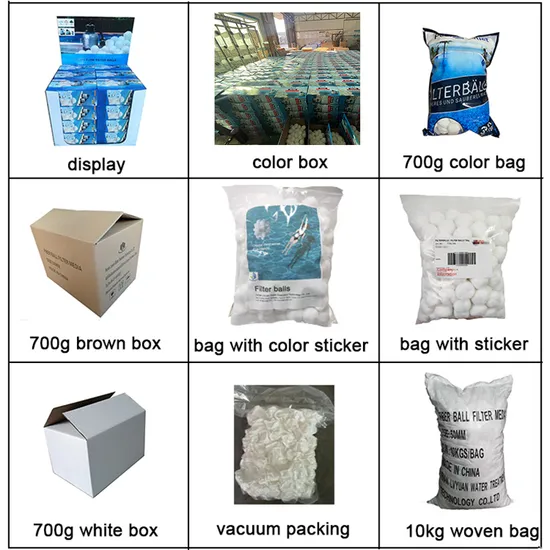
| Specification | 700g/bag |
| Trademark | BuyChemCn |
| Origin | Henan China |
| Production Capacity | 200tons /Year |
| Package Size | 55.00cm * 56.00cm * 40.00cm |
| Package Gross Weight | 26.500kg |
Overcoming Filtration Inefficiency in Industrial Water Treatment Systems
For over a decade, we've witnessed industrial water treatment facilities struggle with filtration media that compromise efficiency—high resistance leading to increased energy costs, uneven flow distribution causing bypass, and rapid clogging requiring frequent replacements. These issues aren't just operational nuisances; they directly impact process stability and research reproducibility in laboratory settings.
A High-Performance Solution: 96% Porosity Bio Filter Media Balls
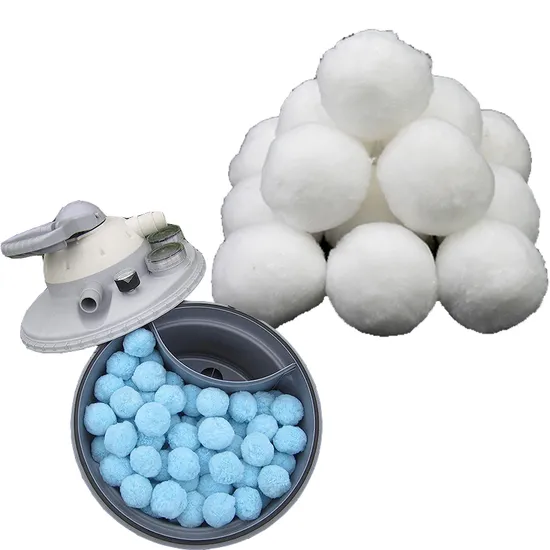
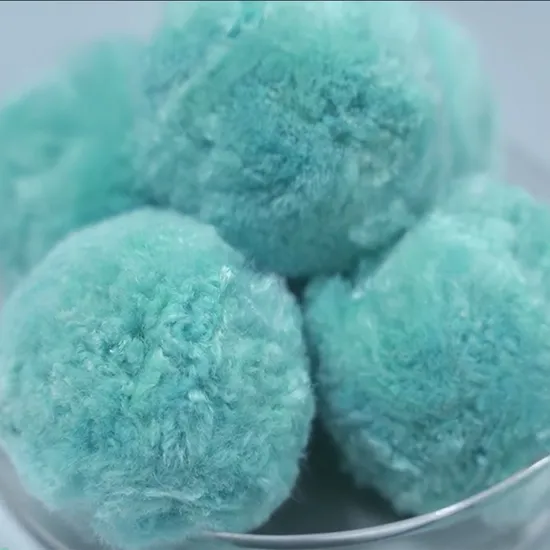
Our Aquarium Swimming Pool Bio Filter Media Balls address these challenges through engineered 96% porosity, creating an optimal balance between flow rate (20~85m/H) and particle retention. Designed for industrial-scale water treatment systems, these Pool Filter Balls maintain consistent performance even under variable load conditions, supported by our 200-ton annual production capacity to ensure uninterrupted supply for large-scale operations.
Industrial Applications & Research Scenarios
These Swimming Pool Filtration Media Balls excel in industrial recirculating water systems, aquaculture research facilities, and environmental monitoring laboratories. Their polyester construction provides chemical resistance suitable for pH-adjusted water streams, while the 75~85kg/M³ filling density allows precise volumetric loading in custom filtration columns—critical for standardized research protocols and manufacturing processes.
Why Key Specifications Drive Performance
The 96% porosity is not merely a technical specification but the foundation of operational efficiency: it minimizes pressure drop across filtration beds, reducing pump energy consumption by up to 30% compared to conventional media. The controlled filtration rate (20~85m/H) ensures sufficient contact time for biological activity in industrial biofilters, while the 700g/bag packaging allows accurate dosing for system calibration. Material consistency is guaranteed through batch testing, with each production run analyzed for density uniformity to prevent channeling in large-scale filtration units.
Quantifiable Benefits of Premium Filtration Media
Investing in our Efficient Filtration Media Balls translates to measurable operational improvements: extended media lifespan reduces replacement frequency by 40%, lowering maintenance downtime and labor costs. The uniform porosity eliminates flow bypass, ensuring compliance with industrial water discharge standards. Unlike low-quality alternatives prone to fiber shedding, our polyester construction maintains structural integrity, preventing downstream contamination of process water—a critical advantage for research applications requiring consistent sample quality.
Quality Assurance You Can Verify
Every batch of Aquarium Bio Filter Media Balls undergoes multi-point testing: porosity is verified using mercury intrusion porosimetry, flow rate performance is validated through column testing, and material composition is confirmed via Fourier-transform infrared spectroscopy (FTIR). Each shipment includes a Certificate of Analysis detailing these test results, with raw data available upon request. Our ISO 9001-certified production process ensures batch-to-batch consistency, supported by a 30-day performance guarantee for industrial installations.
Certificate of Analysis & Documentation
All orders include a comprehensive COA with porosity, flow rate, and density measurements, along with an MSDS containing handling precautions and disposal guidelines. For research institutions requiring detailed performance data, we provide supplementary test reports including pressure drop curves and media lifespan projections based on your specific operating parameters.
Storage & Handling
- Store in a cool, dry, well-ventilated area, sealed and away from direct sunlight.
- Keep away from incompatible materials, food and feed sources.
- Handle with appropriate personal protective equipment (gloves, goggles, lab coat).
- Follow good industrial hygiene practices. Avoid inhalation and skin contact.
- Refer to MSDS for detailed storage and safety instructions.
Streamlined Order Process for Industrial Buyers
Initiate your order by submitting a technical inquiry specifying your filtration system dimensions and flow requirements—our engineering team will recommend optimal loading density and quantity. Request a sample for bench-scale testing, then proceed to bulk order with flexible delivery schedules via our global logistics network. All industrial orders include dedicated technical support for installation guidance and performance optimization.
Frequently Asked Questions
Q: What is the shelf life of the filter media balls?
A: When stored in original unopened packaging under recommended conditions, the product maintains performance specifications for 24 months from the manufacturing date.
Q: Can these filter balls be used in drinking water treatment systems?
A: No. This product is intended for industrial and laboratory research use only, and not for applications involving potable water or direct human contact.
Q: What documentation is provided with each order?
A: Each shipment includes a Certificate of Analysis (COA) and Material Safety Data Sheet (MSDS). Additional technical documentation is available upon request.
Q: Is custom packaging available for large-scale orders?
A: Yes, we offer custom packaging solutions for industrial clients, including bulk bags and palletized configurations to optimize handling efficiency.
Q: How is porosity measured and guaranteed?
A: Porosity is measured using mercury intrusion porosimetry (MIP) per ASTM D4404 standards, with test results documented in the COA. Our manufacturing process controls porosity within ±1% of the specified 96% value.