For industrial manufacturing and laboratory research purposes only.
Product Specifications
| Parameter | Value |
|---|---|
| Model NO. | LY-C |
| Product Type | Cat Litter |
| Application | Cat |
| Operation Type | Manual |
| Waterproof | Waterproof |
| Packaging | Bag |
| Packing | Customized |
| pH | 3.5-5.0 |
| Specification | Granular |
| Origin | China |
Addressing Industrial Silica Gel Litter Challenges with High Absorbency Solutions
Industrial researchers and manufacturers working with absorbent materials often face critical issues: inconsistent liquid retention rates compromising experimental results, poor granular stability leading to dust contamination, and unreliable supply chains causing production delays. Over our 10+ years in chemical manufacturing, we’ve witnessed how these challenges directly impact R&D efficiency and industrial process reliability—especially in applications requiring precise absorbency control.
High Absorbency Silica Gel Crystal Cat Litter: Engineered for Consistency
Our High Absorbency Silica Gel Crystal Cat Litter addresses these pain points through its specialized granular structure and controlled pH range (3.5-5.0). As a leading chemical trade hub serving 50+ countries, we ensure each batch meets strict absorbency standards, making it ideal for industrial testing environments where repeatable performance is non-negotiable. This silica gel litter delivers consistent liquid retention, minimizing variability in research and manufacturing processes.
Industrial Applications and Research Scenarios
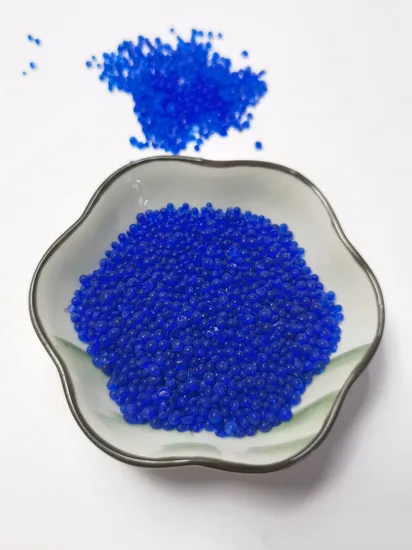
This silica gel cat litter finds utility in industrial settings such as absorbency material testing, moisture control studies, and granular stability research. Its blue granular form and waterproof properties make it suitable for laboratory evaluations of liquid absorption mechanisms, while the customizable packaging options support scaled testing requirements. The product’s parameters—including its granular specification and pH range—provide a standardized medium for comparative analysis in material science research.
Key Specifications: Why They Matter in Industrial Research
The pH range (3.5-5.0) is critical for studies involving acid-base reactions or microbial growth inhibition, ensuring compatibility with various testing protocols. The granular structure enhances surface area contact, optimizing liquid absorption efficiency—a key factor in absorbency rate experiments. Waterproof properties prevent structural breakdown during testing, maintaining integrity throughout data collection. These specifications collectively ensure the product’s reliability as a consistent research tool, reducing experimental variables and improving result accuracy.
The Value of Reliable Silica Gel Litter in Research and Production
Using our Silica Gel Cat Litter minimizes the risks associated with substandard absorbent materials: inconsistent results from batch-to-batch variations, research delays due to supply disruptions, and compromised data from unstable physical properties. Our ISO 9001-compliant manufacturing processes guarantee each 3.8L bag meets uniform quality standards, supporting long-term research projects and industrial testing programs. The product’s stability translates to cost efficiency, reducing the need for repeated testing and material replacements.
Our Commitment to Quality and Supply Chain Integrity
We uphold rigorous quality control through multiple stages of testing, including absorbency efficiency verification and granular size analysis. Each batch is accompanied by a Certificate of Analysis (COA) detailing key parameters, ensuring full traceability for research documentation. Our bonded warehousing capabilities in Hong Kong enable stable inventory management, supporting consistent supply even for large-scale research projects. With dedicated technical support, we assist in optimizing product application within specific experimental frameworks, ensuring maximum utility for your research needs.
Certificate of Analysis & Documentation
Every order includes a batch-specific COA and MSDS, providing detailed information on physical properties, pH levels, and handling precautions. For research transparency, specific test data can be requested using your order reference number, and additional testing reports are available upon demand to support regulatory compliance in laboratory settings.
Storage & Handling
- Store in a cool, dry, well-ventilated area, sealed and away from direct sunlight.
- Keep away from incompatible materials, food and feed sources.
- Handle with appropriate personal protective equipment (gloves, goggles, lab coat).
- Follow good industrial hygiene practices. Avoid inhalation and skin contact.
- Refer to MSDS for detailed storage and safety instructions.
Streamlined Order Process for Industrial Research
Initiate your order by submitting an inquiry through our sales team, specifying your research requirements and packaging preferences. We provide product samples for preliminary testing upon request, ensuring compatibility with your experimental protocols before full-scale ordering. Our supply chain finance options support flexible procurement, aligning with research project timelines and budgetary needs.
Frequently Asked Questions
Q: What is the shelf life of the silica gel cat litter?
A: When stored properly in sealed packaging, the product maintains stability for 24 months from the manufacturing date.
Q: Can this product be used in food or pharmaceutical applications?
A: No, this product is strictly for industrial and laboratory research use only, not for direct human consumption or therapeutic applications.
What documentation is provided with each order?
A: Each shipment includes a Certificate of Analysis (COA) and Material Safety Data Sheet (MSDS) specific to the batch.
Q: Is custom packaging available for large research orders?
A: Yes, customized packaging options are available to support specific research or testing requirements.
Q: How is the product's absorbency verified?
A: Absorbency is tested through standardized liquid retention protocols, with results documented in the batch-specific COA.