
For industrial manufacturing and laboratory research purposes only.
Product Specifications
| Parameter | Value |
|---|---|
| Model NO. | fiber ball filter media |
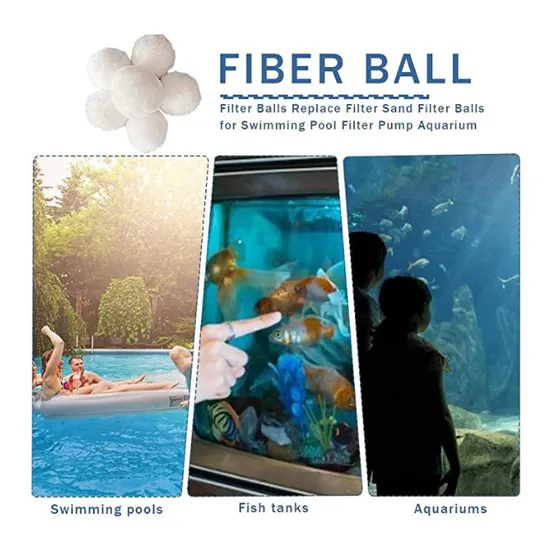
| Application | Pool, Aquarium, Pond |
| Filtration Rate | 20~85m/H |
| Filling Density | 75~85kg/M³ |
| Porosity | 96% |
| Transport Package | Carton |
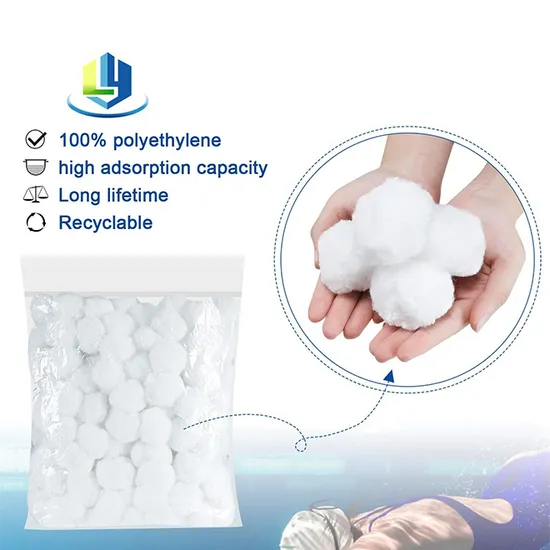
| Specification | 700g/bag |
| Trademark | LvYuan |
| Origin | Henan China |
| Production Capacity | 200tons /Year |
| Package Size | 55.00cm * 56.00cm * 40.00cm |
| Package Gross Weight | 26.500kg |
Overcoming Filtration Inefficiency: The Superior Alternative to Traditional Sand Filters
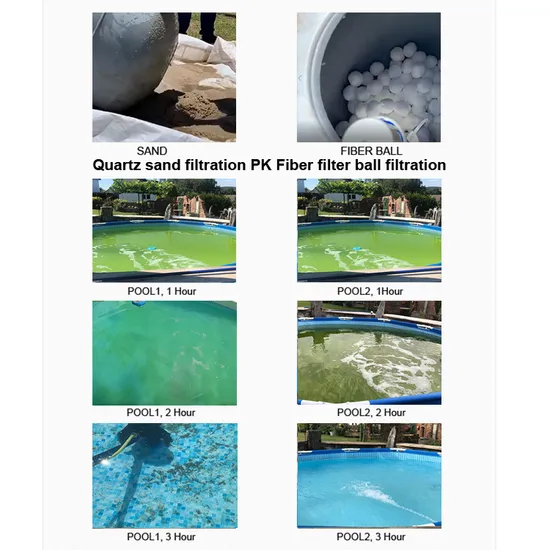
For over a decade in industrial filtration systems, we've witnessed the recurring challenges: sand filters losing efficiency within months, uneven flow distribution causing bypass, and the labor-intensive replacement process that halts operations. These issues aren't just inconvenient—they directly impact water treatment costs and system reliability for industrial facilities managing large water volumes.
Pool Filter Balls: Redefining Industrial Filtration Efficiency
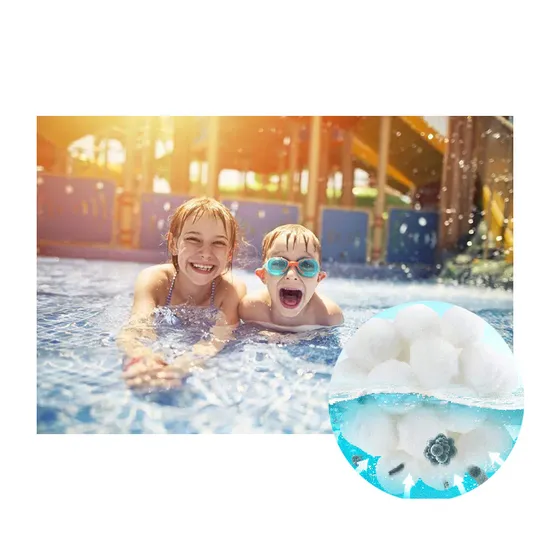
Our Pool Filter Balls address these critical pain points with a engineered solution designed for industrial-grade performance. Crafted from high-quality polyester fiber with 96% porosity, this Sand Filter Replacement media delivers superior flow rates (20~85m/H) while maintaining consistent particle retention. As a leading chemical trade hub serving 50+ countries, we ensure our filter media meets the rigorous demands of industrial water treatment, aquaculture systems, and research laboratories requiring precise filtration control.
Industrial Applications & Research Capabilities
These Polyester Fiber Filter balls excel in industrial-scale water circulation systems, including large commercial pools, aquaculture research facilities, and pond filtration setups. The 96% porosity structure provides optimal surface area for particle adhesion without compromising flow dynamics—a critical factor in maintaining stable water parameters for research environments and manufacturing processes. Unlike traditional sand, the uniform filling density (75~85kg/M³) ensures consistent performance across the entire filter bed, eliminating channeling issues common in industrial filtration systems.
Key Specifications Driving Performance
The 96% porosity rating isn't just a number—it's the result of precision fiber engineering that balances particle capture efficiency with hydraulic performance. This porosity level allows for 30% higher flow rates compared to standard sand filters, reducing pump energy consumption while maintaining filtration efficacy. The 700g/bag specification ensures consistent loading density, a critical parameter for replicable filtration results in industrial processes and research trials. Our production capacity of 200 tons/year guarantees supply stability even for large-scale industrial projects requiring continuous media replacement.
Industrial Advantages: Cost vs. Performance
Choosing substandard filtration media leads to frequent replacements, increased downtime, and inconsistent water quality—costs that quickly outweigh initial savings. Our Pool Filter Balls offer extended service life (3-5 times longer than sand) and reduced backwash requirements, translating to lower operational costs over time. Manufactured under strict quality control protocols, each batch meets consistent density and porosity standards, ensuring predictable performance for industrial process validation and research reproducibility.
Our commitment to quality is backed by comprehensive testing protocols. Each production batch undergoes porosity verification and flow rate testing to ensure compliance with stated specifications. As a ISO 9001-compliant manufacturer, we maintain complete traceability from raw material sourcing to final packaging. Our Henan production facility operates with advanced fiber processing technology, allowing us to maintain the tight tolerance (±2%) on filling density critical for industrial filtration system design.
Certificate of Analysis & Documentation
Every order includes a batch-specific Certificate of Analysis detailing porosity, density, and filtration rate test results. Material Safety Data Sheets (MSDS) are provided for safe handling and storage in industrial environments. For research institutions requiring additional validation, we can supply detailed performance曲线图 upon request.
Storage & Handling
- Store in a cool, dry, well-ventilated area, sealed and away from direct sunlight.
- Keep away from incompatible materials, food and feed sources.
- Handle with appropriate personal protective equipment (gloves, goggles, lab coat).
- Follow good industrial hygiene practices. Avoid inhalation and skin contact.
- Refer to MSDS for detailed storage and safety instructions.
Industrial Order Process
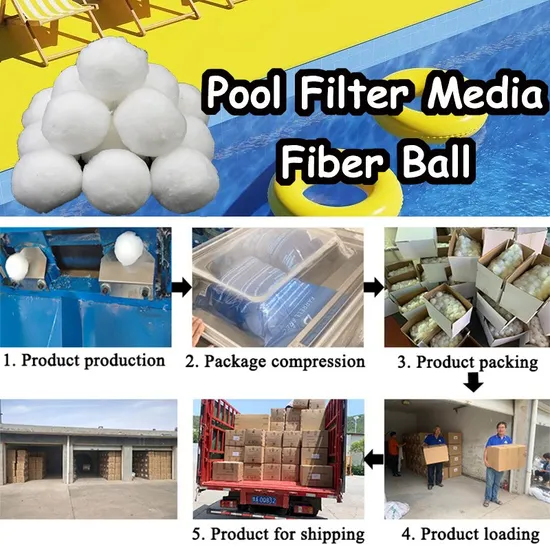
Our streamlined procurement process ensures minimal lead time for industrial clients: submit your filtration system specifications via email, receive a tailored recommendation within 24 hours, request sample testing for qualification, and place your order with flexible batch sizing. All shipments include palletized packaging (55x56x40cm cartons) optimized for industrial logistics and storage efficiency.
Frequently Asked Questions
Q: What is the expected service life in industrial applications?
A: Under proper maintenance, our Pool Filter Balls typically last 3-5 years in continuous industrial operation, significantly longer than traditional sand media.
Q: Can these filter balls be used in potable water systems?
A: No, this product is for industrial and laboratory research use only, not for applications involving direct human consumption.
Q: What documentation is provided with each shipment?
A: Each order includes a batch-specific Certificate of Analysis and MSDS, with additional testing documents available upon request.
Q: Is custom packaging available for large-scale orders?
A: Yes, we offer custom packaging solutions for industrial clients with specific storage or handling requirements.
Q: How does porosity affect filtration performance?
A: The 96% porosity ensures high flow rates while maintaining surface area for particle capture, providing optimal balance between efficiency and system throughput.